
Mouth Breathing and CPAP: What Patients Should Know
A patient-friendly guide to dry mouth, mouth leak, mask options, and questions to discuss with your care team.
Key takeaway
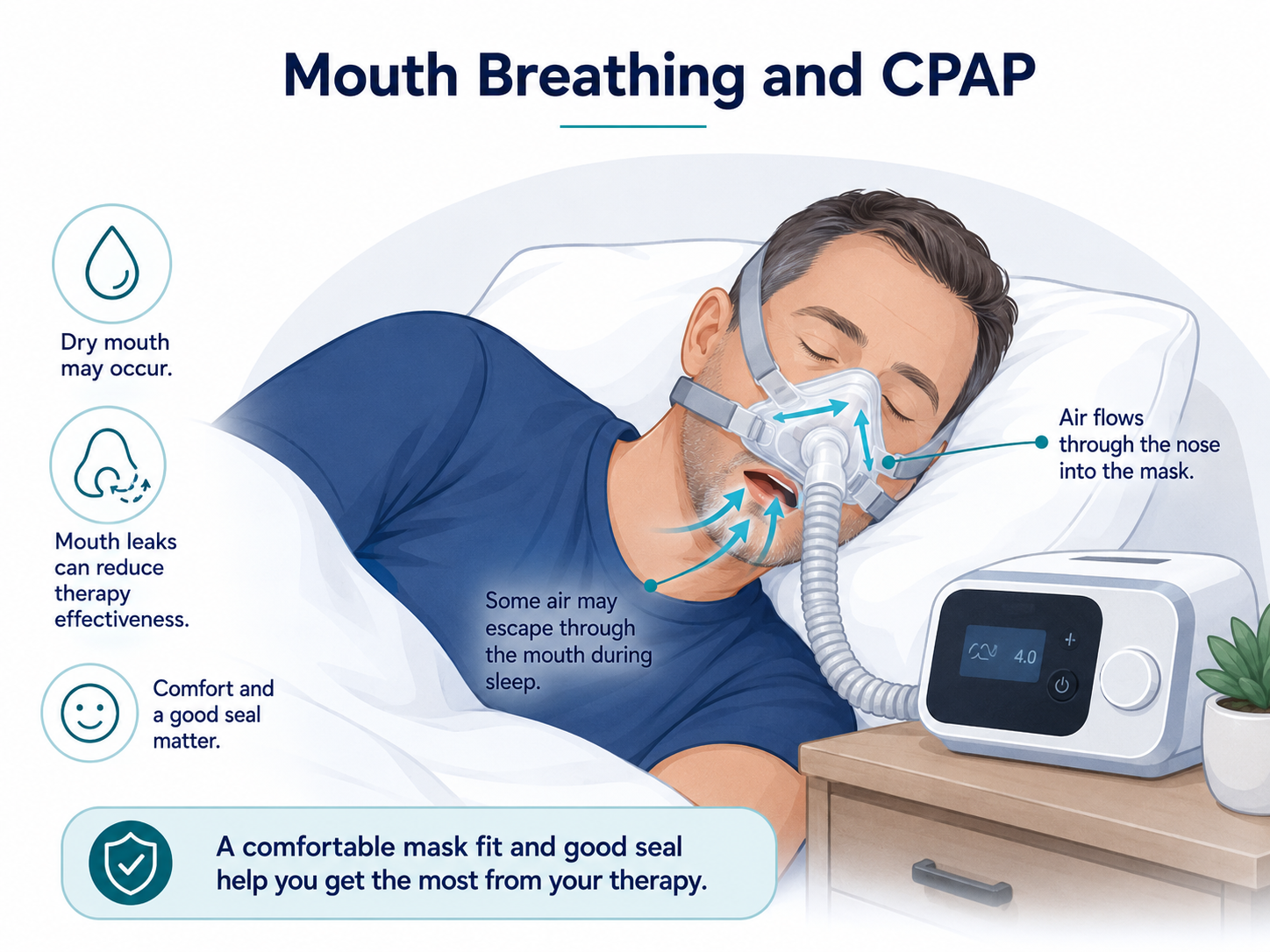
Mouth breathing is common, but it does not automatically mean you must use a full face mask. Some patients benefit from full face options, while others may still do well with nasal or nasal pillow styles. The best choice depends on comfort, seal, dry mouth symptoms, nasal congestion, therapy experience, and guidance from your care team.
What is mouth breathing?
Mouth breathing means air moves through your mouth during sleep, either all the time or some of the time. It can happen for many reasons, including nasal congestion, allergies, sleep position, comfort issues, or simply your natural breathing pattern. Some patients notice mouth breathing because they wake up with a dry mouth. Others may not notice it directly but may see signs such as mask leak, dryness, or discomfort during therapy.How mouth breathing can affect CPAP therapy
When you breathe through your mouth during sleep, it can affect how comfortable CPAP therapy feels and how well your mask maintains a seal. For some nasal-mask users, air may enter through the nose and escape through the mouth. Published research has linked mouth leak during nasal CPAP with sleep fragmentation in some patients, which is one reason leak and dry mouth should be discussed with a care team [1]. This does not mean CPAP will not work for you. It simply means your mask style, humidification, nasal comfort, leak control, and follow-up support may need attention.- You may wake up with a dry mouth or dry throat.
- Air may leak from your mouth when using a nose-only mask.
- You may feel that the pressure is uncomfortable or uneven.
- You may wake up more often or feel less rested.
- Your mask may need adjustment, refitting, or a different style.
Do mouth breathers need a full face mask?
Not always. Full face masks can be helpful for some people who breathe through their mouth, especially if they have ongoing mouth leak, dry mouth, or nasal congestion that makes nose-only breathing difficult. But a full face mask is not automatically the only option. Many patients still do well with nasal masks, under-the-nose nasal masks, or nasal pillow masks. In fact, published reviews and studies comparing nasal and oronasal interfaces show that mask choice can affect pressure needs, residual events, leaks, and comfort, so it is better to personalize the decision instead of assuming one mask type is always best [2][3]. A conversation with your care team, DME provider, or sleep professional is the best way to understand what is right for you.Can nasal breathing improve once therapy is working?
Sometimes, but not always. Nasal breathing is often preferred when it is comfortable and possible. Some patients may find nasal breathing easier once therapy is working well, mask leak is reduced, humidity is adjusted, and nasal symptoms are managed. Other patients may still need a mask style that supports mouth breathing. The goal is not to force one breathing pattern. The goal is to find a setup that is comfortable, effective, and sustainable.Factors that can contribute to mouth breathing
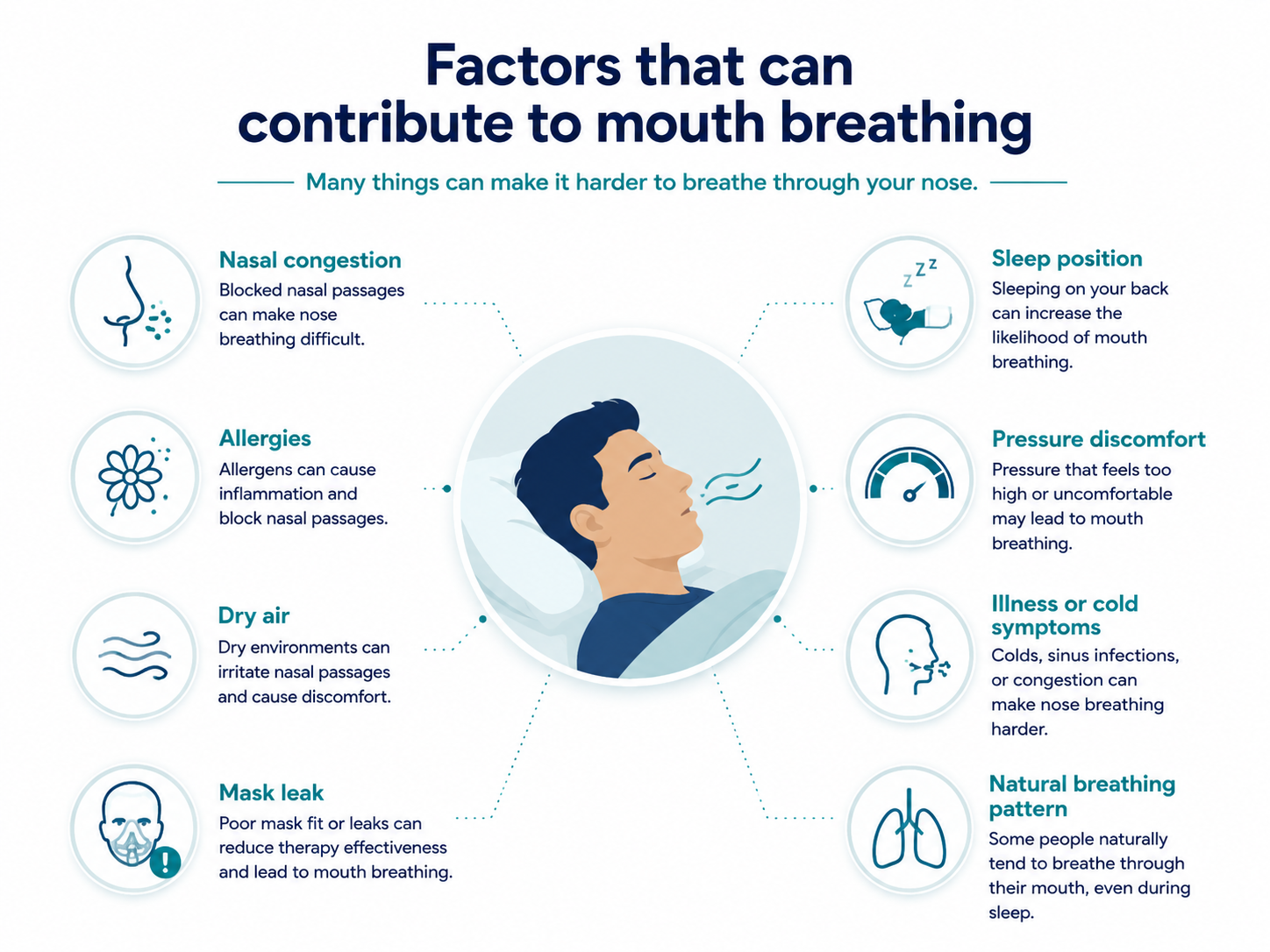
Several things can make mouth breathing more likely during sleep. These may include:- Nasal congestion or allergies
- Sinus issues or nasal blockage
- Dry air or low humidity
- Mask leak or poor mask fit
- Sleeping position
- Pressure or comfort issues
- Illness, cold symptoms, or temporary congestion
- Your natural breathing pattern during sleep
What else may help with mouth breathing or dry mouth?
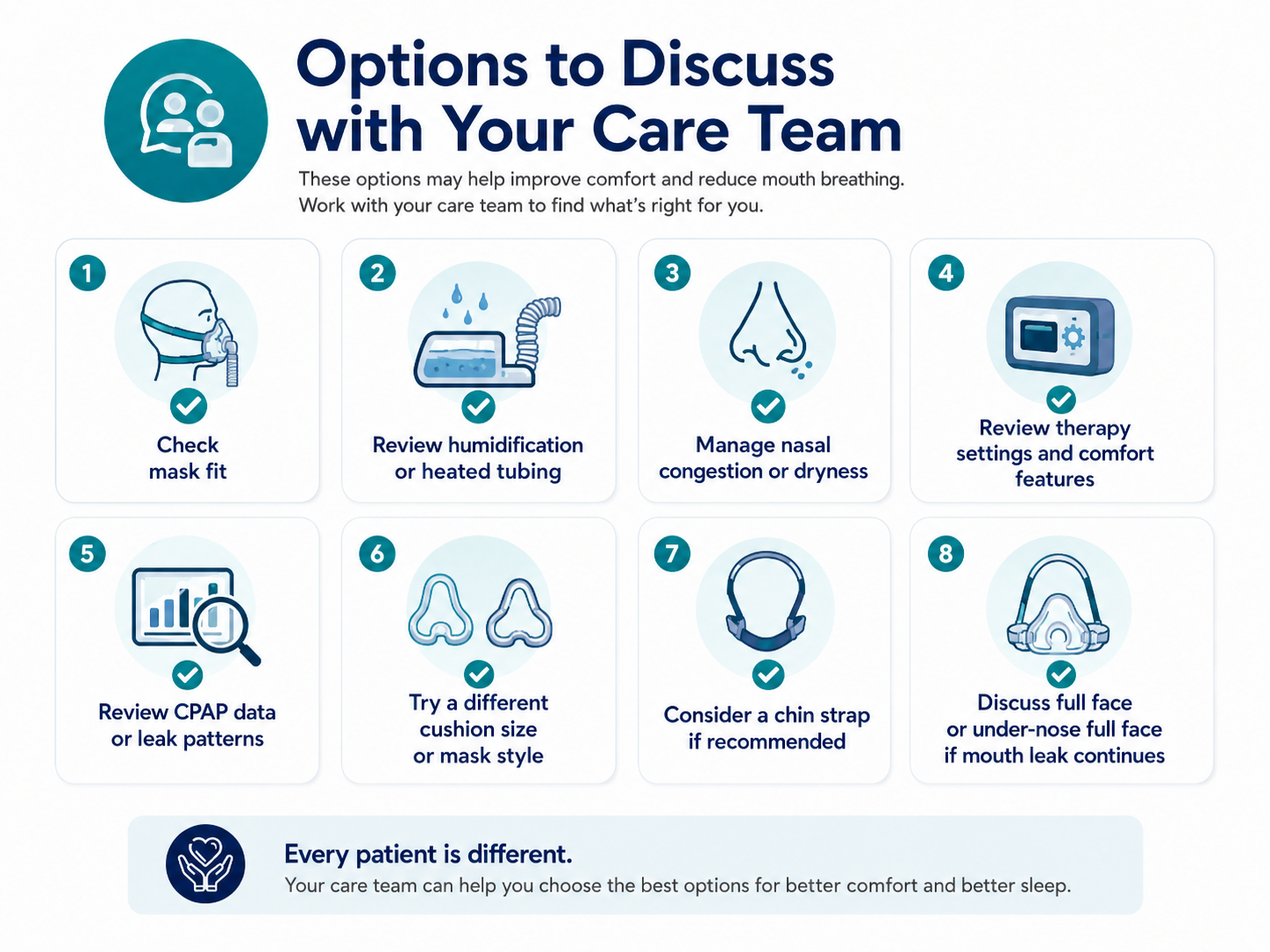
If you breathe through your mouth or wake up with dry mouth, changing to a full face mask is not always the only option. The best next step depends on why it is happening. Possible options to discuss with your care team may include:- Checking whether your current mask fits properly and is not over-tightened
- Adjusting humidification or using heated tubing, if available
- Managing nasal congestion, allergies, or dryness
- Reviewing your therapy settings and comfort features
- Reviewing CPAP data for leak patterns or other therapy issues
- Trying a different cushion size or mask style
- Using a chin strap with a nasal-style mask, if recommended
- Considering a standard full face or under nose full face mask if mouth leak continues
Where chin straps may fit in
A chin strap may help some patients keep the mouth more closed when using a nasal or nasal pillow mask. Some published guidance and studies discuss chin straps as one possible way to reduce mouth leak or dry mouth in selected patients [4]. However, a chin strap is not right for everyone. If nasal congestion, pressure discomfort, claustrophobia, or other breathing issues are present, forcing the mouth closed may make therapy less comfortable. This is why chin straps should be discussed with a care team rather than treated as a default solution.A note about mouth taping
Some patients hear about mouth taping online. This should not be used without guidance from a qualified care professional. A recent systematic review found limited evidence and raised safety concerns about indiscriminate nighttime mouth taping in people with mouth breathing, sleep-disordered breathing, or obstructive sleep apnea [5]. If nasal breathing is blocked or difficult, forcing the mouth closed may be uncomfortable or unsafe. If mouth leak, dry mouth, or mouth breathing is a concern, it is better to talk with your care team about safer options.Mask options to consider
Different mask styles can support different needs. Mouth breathing may be part of the decision, but it should not be the only factor. Standard Nasal Mask: Covers the nose only. May work well for many nose breathers and may still work for some patients who occasionally mouth breathe, depending on seal, comfort, humidity, and provider guidance. Under the Nose Nasal Mask: Sits under the nose and keeps the mouth uncovered. May feel more open than a standard nasal mask while still supporting nose-only therapy. Standard Nasal Pillow Mask: Sits at or near the nostrils. Small and lightweight. It may be comfortable for patients who want minimal facial contact, but nostril fit and mouth leak should be considered. Standard Full Face Mask: Covers both the nose and mouth. May help some patients who need mouth coverage, have mouth leak, or have difficulty with nose-only masks. Under Nose Full Face Mask: Covers the mouth and sits under the nose. May be helpful for patients who need mouth coverage but want a more open feel around the upper nose and eyes. The goal is not to force every mouth breather into one mask type. The goal is to find a mask that feels comfortable, seals well, and supports consistent therapy use.How MaskFit IQ can help
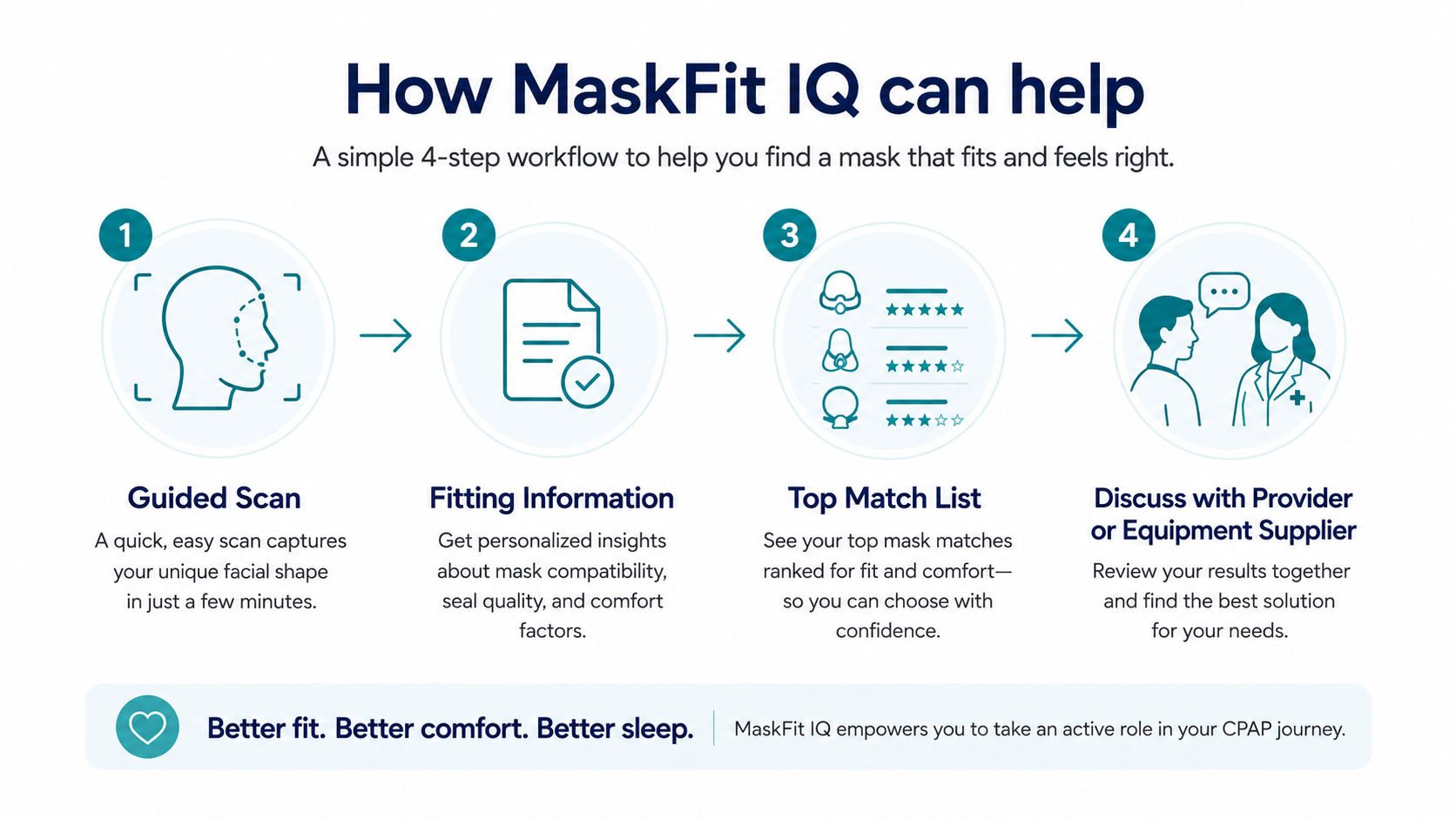
MaskFit IQ is designed to support the mask fitting process by using a guided digital workflow. Instead of asking patients to guess from a long product list, MaskFit IQ helps create a structured top match list based on the scan and fitting information. The goal is not to replace your care team or make the final decision for you. The goal is to make the mask selection process easier to understand and more informed. Your final mask choice may still depend on comfort, provider guidance, product availability, follow-up experience, and personal preference.Questions to ask your care team
- Is my current mask fitting properly?
- Is my dry mouth likely related to mouth leak, humidity, nasal congestion, or something else?
- Should I try a different cushion size or mask style?
- Would a chin strap be appropriate for me, or should I avoid it?
- Should my humidification or heated tubing settings be reviewed?
- Do my CPAP data or leak patterns suggest a problem?
- Would a standard full face or under nose full face mask be worth considering?
When to contact your care team
Contact your clinic, DME provider, or sleep professional if you are experiencing ongoing dryness, mask leak, discomfort, nasal congestion, pressure concerns, or trouble using therapy consistently. Small adjustments can make a meaningful difference. Sometimes the issue is the mask style. Sometimes it is cushion size, strap adjustment, humidity, congestion, cleaning, or another comfort factor.Remember
Mouth breathing is one factor in CPAP mask choice, not a final answer by itself. Some patients may benefit from full face options, while others may still do well with nasal or nasal pillow styles. The right choice is the one that supports comfort, seal, consistency, and provider guidance.Final takeaway
Mouth breathing is common, and it can affect CPAP comfort. But it does not automatically mean one mask style is right for every patient. If you wake up with dry mouth, notice leaks, or feel uncomfortable with your current mask, talk with your care team. You may need a different mask style, a different size, better humidity support, nasal comfort support, a chin strap if appropriate, or a simple adjustment to your current setup. The best CPAP mask is the one that feels comfortable, seals well, supports your breathing pattern, and helps you keep using therapy.References and further reading
This article is for general education only and is not a substitute for medical advice. Patients should talk with their physician, sleep clinic, DME provider, or care team before changing mask type, pressure settings, or therapy accessories.- Koutaiba A. et al. Mouth Leak Is Associated with Sleep Fragmentation During Nasal CPAP Therapy. View reference
- Andrade RGS, et al. Nasal vs Oronasal CPAP for OSA Treatment: a Meta-Analysis. View reference
- Bakker JP, et al. Importance of Mask Selection on Continuous Positive Airway Pressure Outcomes for Obstructive Sleep Apnea. View reference
- Borel JC, et al. Effect of Addition of Chin Strap on PAP Compliance, Nightly Duration of Use, and Other Factors. View reference
- Safety and Efficacy of Mouth Taping in Sleep-Disordered Breathing: A Systematic Review. View reference