How it works
MaskFit uses AI face scanning, nostril measurement, and clinical inputs to help identify CPAP/BiPAP mask sizes and styles that better match each patient’s facial features and therapy needs.
The process streamlines mask selection into four simple steps. Patients complete a quick face scan in clinic or remotely using any camera-enabled device, and the platform converts that scan into standardized measurements that matter for fit, including nostril sizing for nasal pillow options. Those measurements are matched against a large database of mask models and size profiles, while clinical questionnaire responses help identify the most appropriate mask style for the patient. MaskFit then presents a prioritized Recommended list, based on the scan and clinical inputs, alongside a Scan-Matched list, based on scan measurements only, so patients and clinicians can make confident, informed decisions with less trial and error.
Nostrils matter. We actually scan them.
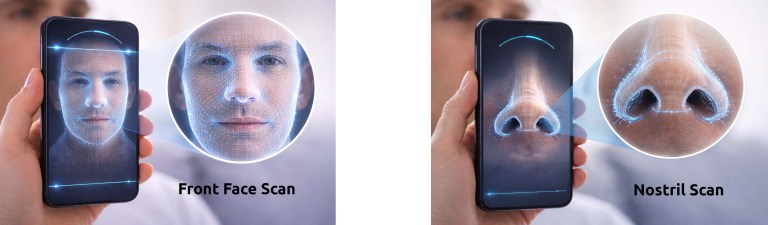
Most fit tools stop at general facial landmarks, which can miss the small details that make or break a seal. MaskFit AR goes further with a patented nostril scan, capturing the nostril-region geometry, the exact fit zone where nasal masks and nasal pillows seal and where leaks usually begin. By measuring what matters most at the point of contact, MaskFit AR reduces trial-and-error, helps you choose the right style and size sooner, and gives you clearer, more actionable guidance, fast.
The MaskFit Process

Scan
Scans can be completed in-clinic or remotely using a secure link sent by email or SMS. Patients use any camera-enabled device, including standard smartphone cameras and webcams, with no special hardware or attachments. Providers can review results in real time as soon as the scan finishes. For privacy, MaskFit does not transmit or store photos; only the fit-related outputs needed for matching are retained.

Measure
MaskFit analyzes facial structure and key fitting landmarks to generate precise, clinically relevant measurements used for mask selection and sizing. It captures facial geometry that affects seal and stability, including nose bridge shape, cheek contours, and jawline structure. MaskFit also measures nostril size, an essential input for nasal pillow fitting, to support more confident pillow sizing.
Match
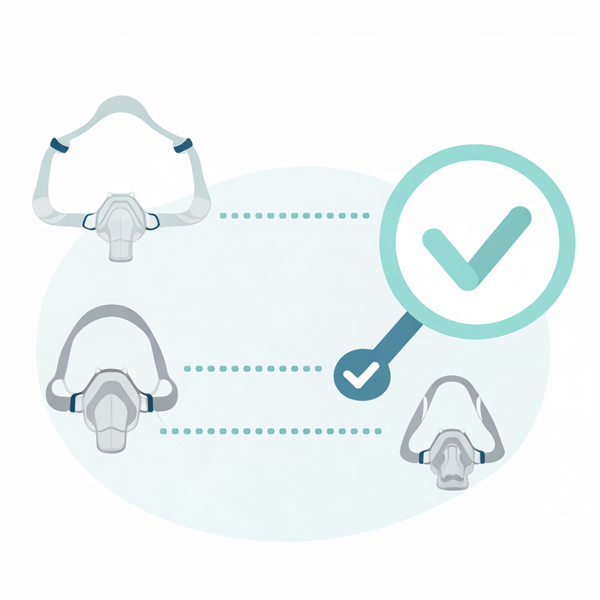
MaskFit compares the patient’s measurements to a large cross-market database of mask models and size profiles to identify structurally compatible options. It then incorporates clinical questionnaire responses to determine the most appropriate mask style based on therapy needs and comfort considerations. This combined approach prioritizes options that fit both facial anatomy and clinical context.

Recommend
MaskFit presents two clear outputs to support decision-making. The first is a prioritized Recommended list that blends facial measurements with clinical responses to suggest the most suitable style, models, and sizes. The second is a Scan-Matched list based on facial data only, showing all structurally compatible options for transparency and flexibility. Together, they help patients and clinicians compare choices and reduce trial-and-error.

CPAP Mask Fitting FAQ
How does MaskFit’s AI face scan support CPAP/BiPAP mask fitting?
MaskFit uses a quick camera-based face scan to capture fit-related facial measurements, including facial geometry, nose bridge shape, cheek contours, jawline structure, and nostril sizing. These measurements help identify mask sizes and styles that better match each patient’s facial features.
Can patients complete the MaskFit scan remotely?
Yes. Patients can complete the scan in clinic or remotely using a secure link sent by email or SMS. The scan works on camera-enabled devices such as smartphones, tablets, laptops, or webcams, with no special hardware required.
Why does MaskFit measure the nostril area?
The nostril region is important for nasal masks and nasal pillow options because it is part of the fit zone where the mask seals. MaskFit’s nostril measurement helps support more accurate nasal pillow sizing and provides additional fit detail beyond general facial landmarks.
What information does MaskFit use besides the face scan?
MaskFit combines scan-based measurements with clinical questionnaire responses. The scan helps evaluate facial structure and size compatibility, while the clinical inputs help identify mask styles that better align with therapy needs and comfort considerations.
What is the difference between the Top Match and the Scan-Matched list?
The Top Match list combines facial measurements with clinical questionnaire responses to prioritize suitable mask styles, models, and sizes. The Scan-Matched list is based on facial measurements only and shows structurally compatible options for added transparency and flexibility.
Does MaskFit store patient photos?
No. MaskFit does not transmit or store patient photos. Only the fit-related outputs needed for mask matching are retained.
Proven Protection: Patented and Pen-Tested

IP-Protected Technology