
Common CPAP Mask Problems and How to Fix Them
A patient-friendly guide to common CPAP mask problems, what may be causing them, and practical steps that may help.


Quick takeaway
Most CPAP mask problems are fixable. Leaks, dry mouth, skin marks, and discomfort often mean that the mask needs cleaning, adjustment, replacement, humidification changes, or a different mask style. If symptoms continue, ask your sleep clinic, CPAP supplier, or healthcare provider for help.
Why mask comfort matters
CPAP therapy sends pressurized air through a mask to help keep your airway open while you sleep. For treatment to work well, the mask needs to be comfortable enough to use whenever you sleep, including during naps [1][2]. A mask that leaks, rubs, or feels uncomfortable can make therapy harder to continue. The good news is that small adjustments often make a meaningful difference, and many mask styles and sizes are available [1][3].1. Air leaks around the mask
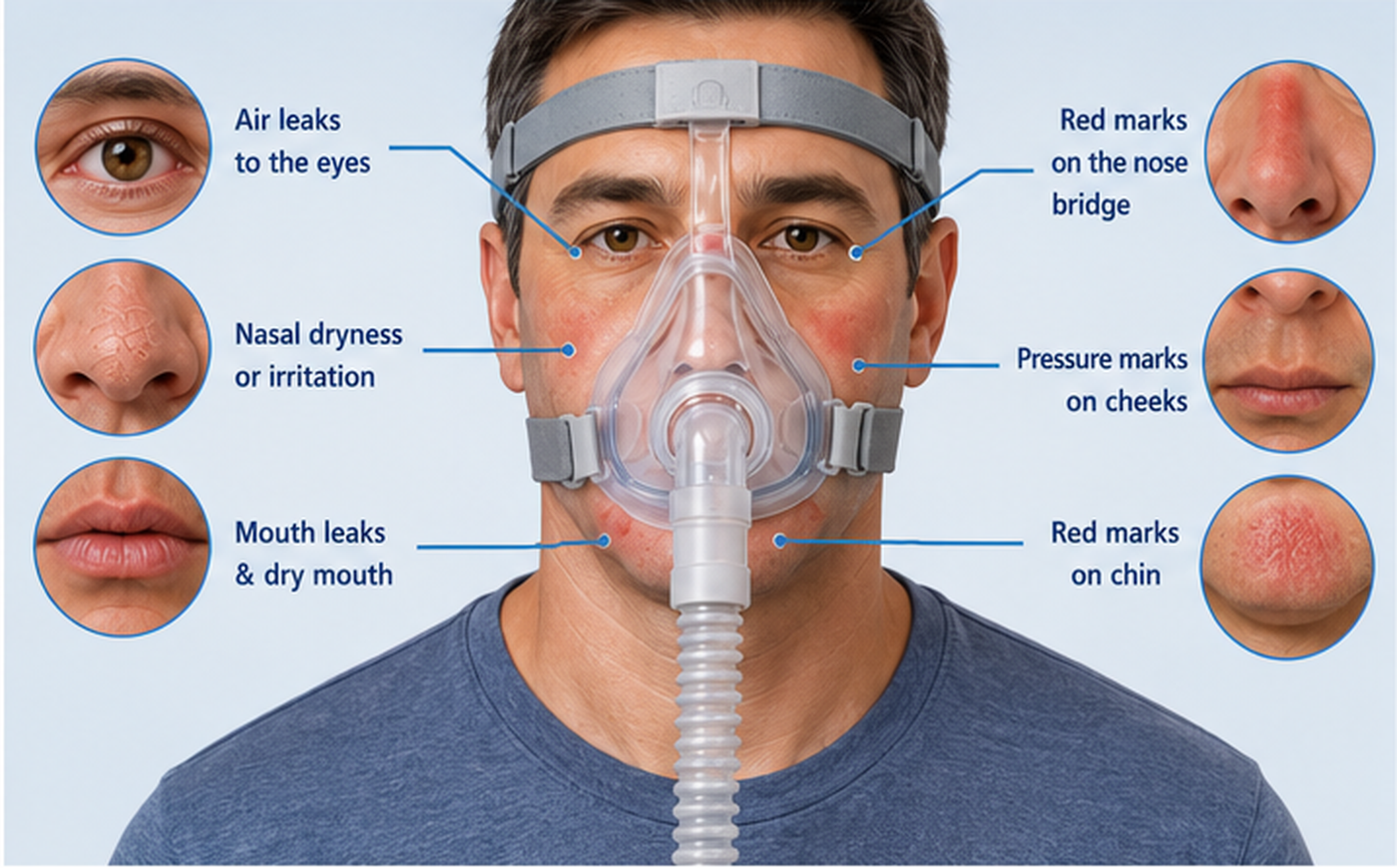
What you may notice: A hissing sound, air blowing into your eyes, dry eyes, a dry or stuffy nose, dry mouth, or your CPAP machine reporting a high leak. Leaks may happen when the mask is the wrong size, the cushion is worn or dirty, the straps are too loose or too tight, facial hair interferes with the seal, or your sleep position pushes the mask out of place [1][4].What to try
- Refit the mask while your CPAP machine is running, because the cushion may inflate slightly under pressure.
- Wash your face before bed and clean the mask cushion regularly to remove skin oil and lotion.
- Check the cushion for cracks, stiffness, loss of shape, or other signs of wear.
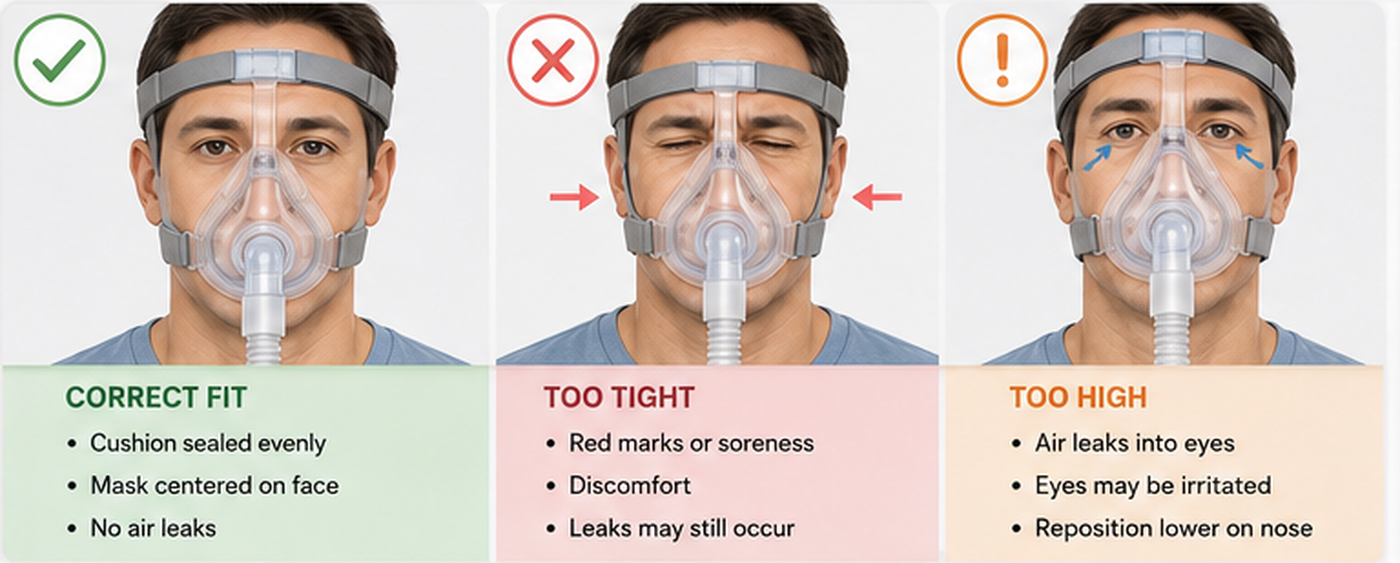
- Avoid overtightening the straps. A mask that is too tight can still leak and may cause soreness.
- Adjust the straps evenly on both sides so the cushion is not twisted.
- Ask your supplier about a different mask size or style if leaks continue.
2. Red marks, soreness, or skin irritation
What you may notice: Red lines, tenderness, itching, a rash, or sore spots where the mask touches your nose, cheeks, chin, or forehead. This may happen when the straps are too tight, the mask shape does not match your face, moisture becomes trapped against the skin, or the cushion is not cleaned properly [1][5][6].What to try
- Loosen the straps slightly and reseat the cushion instead of pulling the headgear tighter.
- Make sure the cushion is centered and resting evenly against your face.
- Clean your face and mask regularly to reduce oil buildup and irritation.
- Use only CPAP-safe mask liners or petroleum-free products if recommended by your care team.
- Ask whether a different cushion size or mask style may reduce pressure on the irritated area.
- Contact your care team if the skin breaks open, pain continues, or irritation becomes worse.
3. Dry mouth or dry nose
What you may notice: Waking up with a dry mouth, sore throat, dry nasal passages, congestion, or nosebleeds. Dryness may be related to mouth breathing, mask leaks, low humidity, nasal congestion, or pressure that feels uncomfortable [1][7].What to try
- Check for mask leaks first, especially if the dryness started suddenly.
- Use heated humidification or heated tubing if your machine supports those features.
- Ask your care team how to adjust humidity settings appropriately.
- Consider saline spray before bed if your healthcare provider says it is appropriate.
- If you use a nasal or nasal pillow mask and your mouth opens during sleep, ask whether chin support or a full face mask may be appropriate.
- Do not change prescribed CPAP pressure settings on your own.
4. Air blowing into the eyes
What you may notice: Dry, watery, red, or irritated eyes. This usually means that air is escaping near the upper part of the mask or that the mask is sitting too high on the bridge of your nose [1][4].What to try
- Reposition the mask slightly lower if it is sitting too high on your nose.
- Refit the mask while the machine is running.
- Adjust the straps evenly on both sides.
- Do not overtighten the upper straps, because this can distort the cushion.
- Replace a cushion that has become stiff, cracked, worn, or misshapen.
- Ask for a professional mask-fit check if eye irritation continues.
5. Feeling claustrophobic or uncomfortable
What you may notice: Feeling trapped, anxious, or unable to fall asleep while wearing the mask. This is common when first starting CPAP therapy, and gradual practice may help [1][6].What to try
- Wear the mask for short periods while awake, such as while reading or watching television.
- Once that feels comfortable, practice with the hose connected.
- Next, practice with the machine running before attempting a full night.
- Ask about nasal pillows, under-the-nose masks, or other low-profile styles if a full face mask feels too large.
- Use ramp or comfort features only as directed by your care team.
- Tell your provider if anxiety prevents you from using the mask consistently.
6. The mask comes off during sleep
What you may notice: You wake up without the mask, see fewer usage hours than expected, or your bed partner notices that you removed it. This may happen because of leaks, discomfort, pressure intolerance, dry mouth, claustrophobia, or a mask style that does not match your sleeping position [1][3].What to try
- Look for the likely trigger, such as leaking, dryness, soreness, pressure discomfort, or anxiety.
- Practice wearing the mask while awake to build tolerance.
- Fit the mask while lying in your normal sleeping position.
- Make sure the hose is not pulling the mask away from your face.
- Ask whether a different mask style may stay more stable in your usual sleeping position.
- Contact your care team early if you cannot keep the mask on during most nights.
7. The mask feels like the wrong style
What you may notice: The mask technically fits, but it still feels bulky, unstable, noisy, uncomfortable, or difficult to sleep with. Different mask styles may work better for different breathing habits, facial features, facial hair, therapy pressures, and sleep positions [1][4][8].What to consider
- Nasal pillow masks provide minimal facial contact and leave the mouth uncovered.
- Under-the-nose nasal masks sit below the nostrils and leave the nose bridge uncovered.
- Standard nasal masks cover the nose but leave the mouth uncovered.
- Full face masks cover both the nose and mouth and may help some people who breathe through their mouth or experience nasal blockage.
- If you move frequently during sleep, ask about a mask that remains stable in your normal sleeping position.
- If your weight, dental work, facial hair, or facial shape has changed, ask for a new fitting.
Quick checklist before changing masks
| Check | Why it matters | Try first | Ask for help if… |
|---|---|---|---|
| Cushion cleanliness | Oil, lotion, and residue can interfere with the seal. | Wash your face and clean the cushion. | Leaks return every night. |
| Strap tension | Loose straps may leak, while tight straps may hurt or distort the cushion. | Reseat the mask, then adjust gently and evenly. | Red marks, soreness, or pain continue. |
| Cushion age | Worn parts may become stiff or lose their shape. | Inspect the cushion for cracks, stiffness, or damage. | You are unsure when the part should be replaced. |
| Humidity | Dry air may worsen nasal and mouth dryness. | Ask how to adjust your humidifier or heated tubing. | Dryness, congestion, or nosebleeds continue. |
| Mask style | Breathing habits, facial features, and sleep position affect comfort. | Compare nasal pillow, nasal, and full face options. | You still cannot sleep comfortably or use CPAP consistently. |
When to contact your care team
Contact your sleep clinic, equipment provider, or healthcare professional if:- You develop skin breakdown, sores, bleeding, or worsening irritation.
- Leaks continue after cleaning, refitting, and inspecting the cushion.
- You feel short of breath, cannot tolerate the pressure, or repeatedly remove the mask.
- Dry mouth, nasal congestion, nosebleeds, or eye irritation do not improve.
- You cannot use your CPAP machine consistently because of discomfort.
- Your sleep apnea symptoms return even though you are using CPAP.
Patient note
Do not stop CPAP therapy or change prescribed pressure settings without guidance from your healthcare provider or sleep clinic. If your first mask does not work for you, there are many other mask types, cushion shapes, and sizes to try.
Final takeaway
Most CPAP mask problems do not mean that CPAP therapy will not work for you. They often mean that the mask needs cleaning, adjustment, replacement, a different size, or a different style. Start by checking the cushion, strap tension, mask position, and humidity. If the problem continues, contact your sleep clinician or equipment provider for a mask-fit review.References and further reading
This article is for patient education only and is not a substitute for medical advice. It does not diagnose sleep apnea, set PAP pressure, or replace advice from a licensed clinician. Follow your prescription and contact your sleep care team before changing your mask, therapy settings, or accessories.- Mayo Clinic. CPAP Machines: Tips for Avoiding 10 Common Problems.
- National Heart, Lung, and Blood Institute. CPAP.
- Patil SP, Ayappa IA, Caples SM, Kimoff RJ, Patel SR, Harrod CG. Treatment of Adult Obstructive Sleep Apnea With Positive Airway Pressure: An American Academy of Sleep Medicine Clinical Practice Guideline. Journal of Clinical Sleep Medicine. 2019;15(2):335–343. DOI: 10.5664/jcsm.7640.
- SleepApnea.org. CPAP Mask Leaks: Causes and Prevention.
- Sleep Foundation. How to Treat CPAP Pressure Sores.
- Sleep Foundation. CPAP Machine Side Effects: Dry Mouth, Aerophagia, and More.
- Sleep Foundation. CPAP Dry Mouth: Causes, Treatment, and Prevention.
- Cleveland Clinic. CPAP Machine: What It Is, How It Works and Side Effects.