
Full Face CPAP Masks: What to Know
A patient-friendly guide to when a full face mask may help, what to watch for, and how to get a better fit.
Full face masks can be a good option when air needs to be delivered through both the nose and mouth. They are often considered for mouth breathing, frequent nasal congestion, or when a nasal mask or nasal pillows continue to leak despite adjustments [1][2].

What is a full face CPAP mask?
A full face CPAP mask, also called an oronasal mask, seals around both the nose and mouth. This allows PAP air to continue flowing even if you open your mouth during sleep [1].
It does not mean a full face mask is automatically better for everyone. The best mask is one that seals well, feels comfortable, and supports consistent therapy use.
A full face mask may help if…
- You breathe through your mouth during sleep or wake up with dry mouth caused by mouth leak.
- Your nose is often blocked because of allergies, congestion, or anatomy.
- You have tried nasal masks or nasal pillows and still cannot control mouth leak.
- Your clinician recommends it because of your pressure setting, breathing pattern, or therapy data.
It may not be the best fit if…
- You feel claustrophobic with larger masks or prefer a more open field of vision.
- You sleep on your side and the cushion shifts against your pillow.
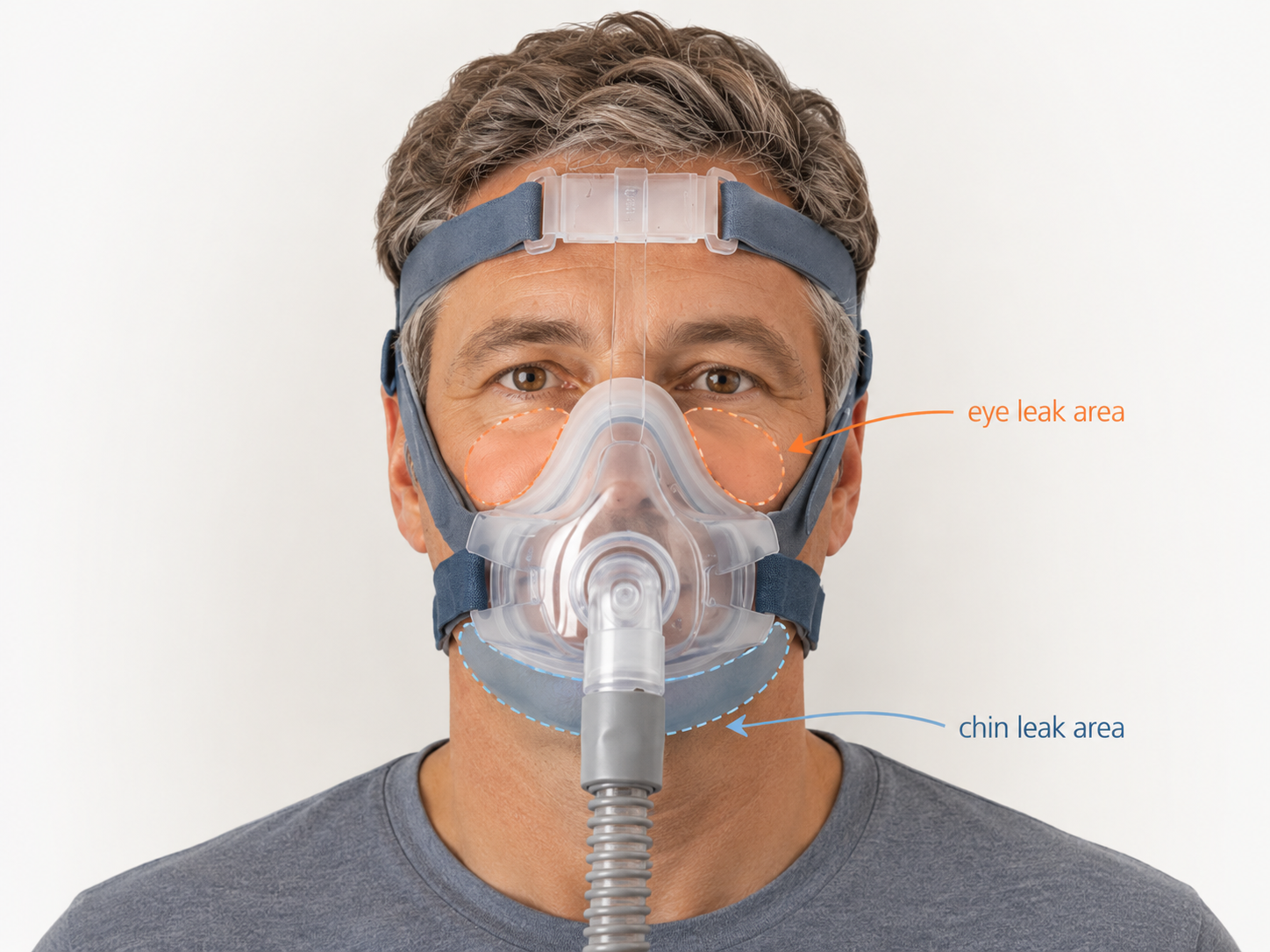
- You experience leaks near your eyes or pressure marks on the bridge of your nose.
- You can breathe comfortably through your nose and a smaller mask seals better.
Common problems and simple fixes
Many full face mask problems can be improved through proper sizing, strap adjustment, humidification, cushion replacement, or trying a different mask style.
Use the suggestions below as a starting point, not as a substitute for guidance from your care team.
Leaks near the eyes: Refit the mask while your CPAP machine is running. Do not overtighten the straps. If air continues to blow toward your eyes, you may need a different cushion size or mask style.
Red marks or soreness: Loosen the straps slightly and check the cushion position. A mask that must be very tight to maintain a seal may be the wrong size or style.
Dry mouth: Ask your care team about humidification, heated tubing, mouth leak, and whether your settings or mask style should be reviewed [6].
Bulky feeling: Practice wearing the mask while awake for short periods. If it continues to feel too large, ask about an under-the-nose full face mask or a nasal-style option.
Clinical note
Fit and follow-up matter.
A full face mask can be helpful for some patients. However, research suggests that oronasal masks may sometimes be associated with higher pressure requirements, more residual breathing events, or lower adherence compared with nasal masks and nasal pillows [5].
This does not mean you should avoid a full face mask. It means the mask should be selected carefully, fitted properly, and reviewed if you continue to experience leaks, discomfort, or therapy problems.
Full face mask fit checklist
- The cushion sits evenly without digging into your skin.
- Air is not blowing toward your eyes.
- You can open your mouth naturally without breaking the seal.
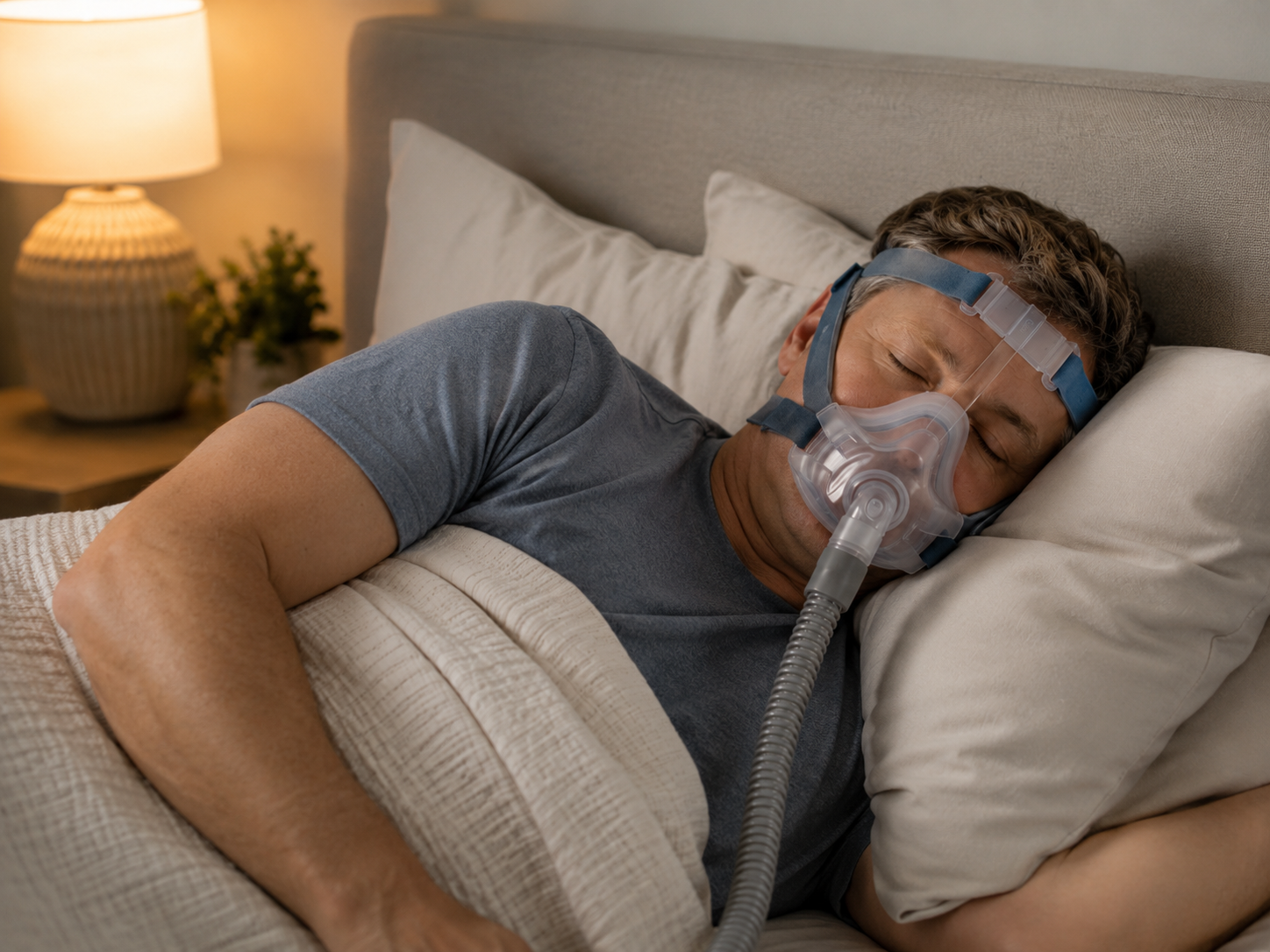
- The mask remains sealed after you change sleep position.
- The straps feel secure without being overly tight.
- You can wear the mask without feeling panicked or restricted.
When to ask for help
Contact your sleep clinician, clinic, or equipment provider if:
- You continue to experience large leaks after carefully refitting the mask.
- You wake up with eye irritation, significant dry mouth, skin sores, or pain.
- You cannot tolerate the mask, even after gradually practicing with it.
- You frequently remove the mask while sleeping.
- Your therapy data shows persistent breathing events, low use, or ongoing mask leak.
Standard and under-the-nose full face masks
Full face masks are available in different designs. Understanding where the mask sits can help you compare options with your care team.
Standard Full Face Mask: Covers both the nose and mouth. It normally sits over the bridge of the nose and seals around the nose and mouth area.
Under Nose Full Face Mask: Covers the mouth but sits below the nostrils instead of covering the bridge of the nose. Some patients prefer this style because it leaves the upper face more open and may feel less bulky.
Both styles provide mouth coverage, but their cushion shape, seal areas, headgear, and overall feel can be very different.
How MaskFit can help
MaskFit can help compare mask options based on face shape, likely seal areas, and comfort needs.
Instead of asking patients to choose from a long product list without guidance, MaskFit provides a structured top match list based on the face scan and fitting information.
The scan should be used as a starting point. Your final mask choice may also depend on comfort, provider guidance, product availability, therapy settings, and your experience after using the mask.

Questions to ask your care team
- Is my current full face mask the correct size?
- Are my leaks caused by the cushion size, mask position, or strap adjustment?
- Should I try a standard or under-the-nose full face mask?
- Could a smaller nasal-style mask still work for me?
- Is my dry mouth caused by mouth leak, humidity, congestion, or another issue?
- Should my humidification or heated tubing settings be reviewed?
- Do my CPAP data or leak patterns suggest that my mask should be changed?
Final takeaway
A full face CPAP mask may be helpful when breathing through both the nose and mouth is important. However, mouth breathing does not automatically mean that a full face mask is the only option.
The best mask is one that feels comfortable, seals well, supports your breathing pattern, and helps you continue using your therapy.
If one mask does not feel right, it does not mean CPAP therapy will not work for you. You may simply need a different mask style, size, cushion, or fitting approach.
When in doubt, talk with your sleep clinician, DME provider, or equipment supplier.
References and further reading
This article is for patient education only and is not a substitute for medical advice. It does not diagnose sleep apnea, set PAP pressure, or replace advice from a licensed clinician. Follow your prescription and contact your sleep care team before changing your mask, therapy settings, or accessories.
- Mayo Clinic. Which CPAP Masks Are Best for You?
View reference - Mayo Clinic. Sleep Apnea: Diagnosis and Treatment.
View reference - National Heart, Lung, and Blood Institute. CPAP.
View reference - Patil SP, et al. Treatment of Adult Obstructive Sleep Apnea With Positive Airway Pressure: An American Academy of Sleep Medicine Clinical Practice Guideline. Journal of Clinical Sleep Medicine. 2019;15(2):335–343.
View reference - Chen LY, et al. In Search of a Better CPAP Interface: A Network Meta-Analysis Comparing Nasal Masks, Nasal Pillows and Oronasal Masks. Journal of Sleep Research. 2022. DOI: 10.1111/jsr.13686.
View reference - Sleep Foundation. CPAP Dry Mouth: Causes, Treatment, and Prevention.
View reference